Below we have included recommendations for the building envelope assemblies based on the Energy model results shown in
previous sections. These are recommendations only and should be reviewed by the design team to ensure they are
appropriate for the project.
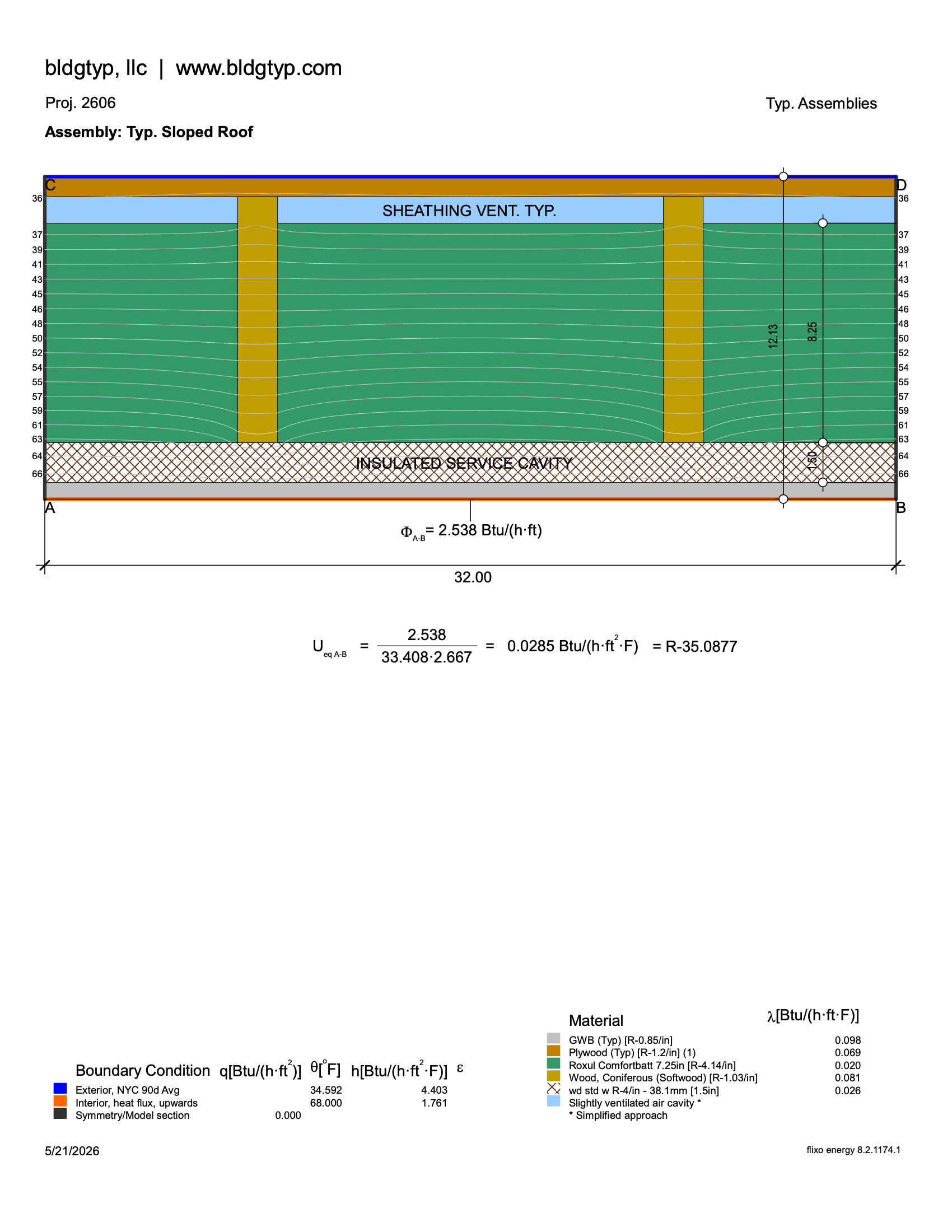
The following assembly U-values have been assessed using project-specific energy-model inputs and supporting
thermal-bridge assumptions. Assembly diagrams should be treated as performance targets and coordination references, not
final construction documents.
Structural coordinationAll structural member sizing and spacing must be provided by the Structural Engineer and/or Architect. Sizing and spacing shown here is related to target insulation levels only.
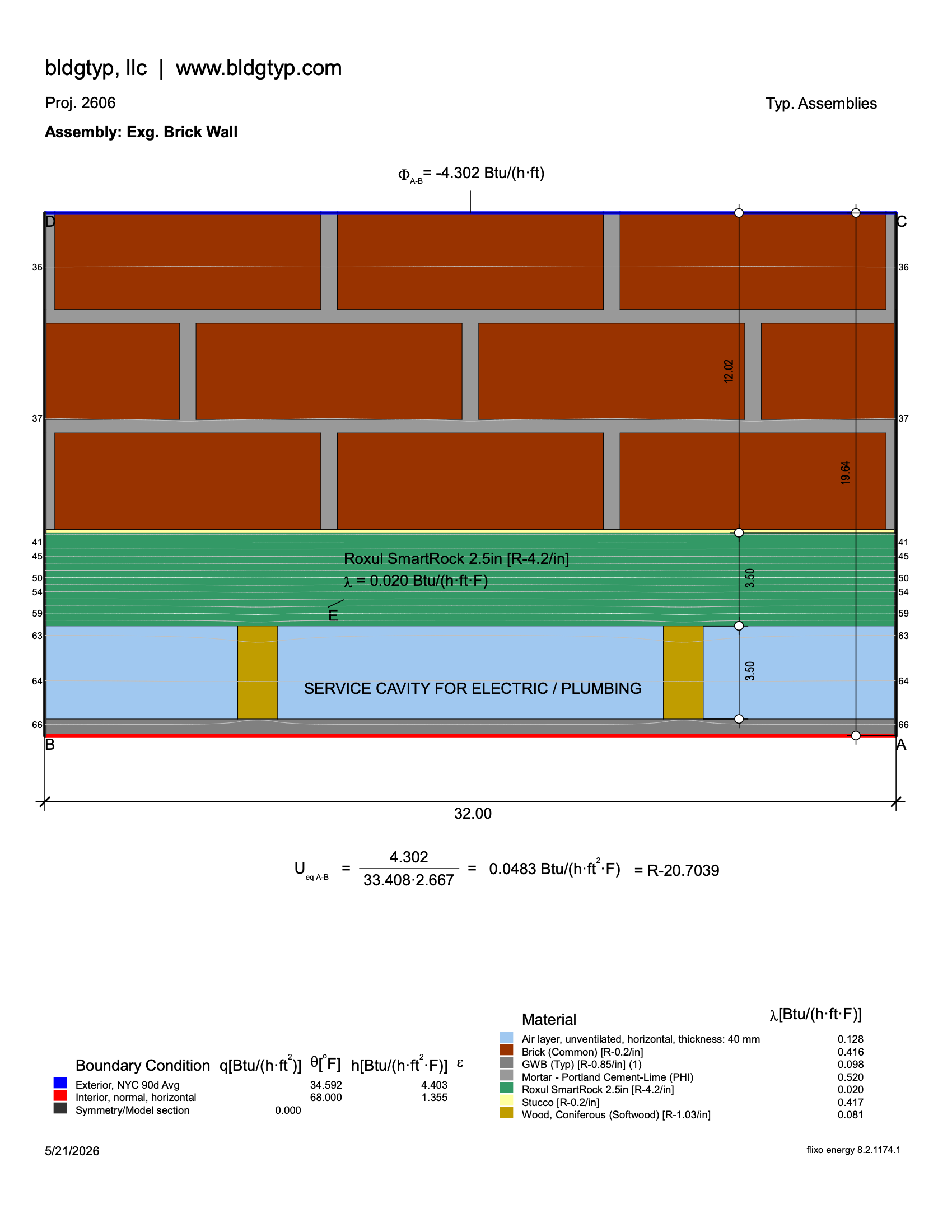
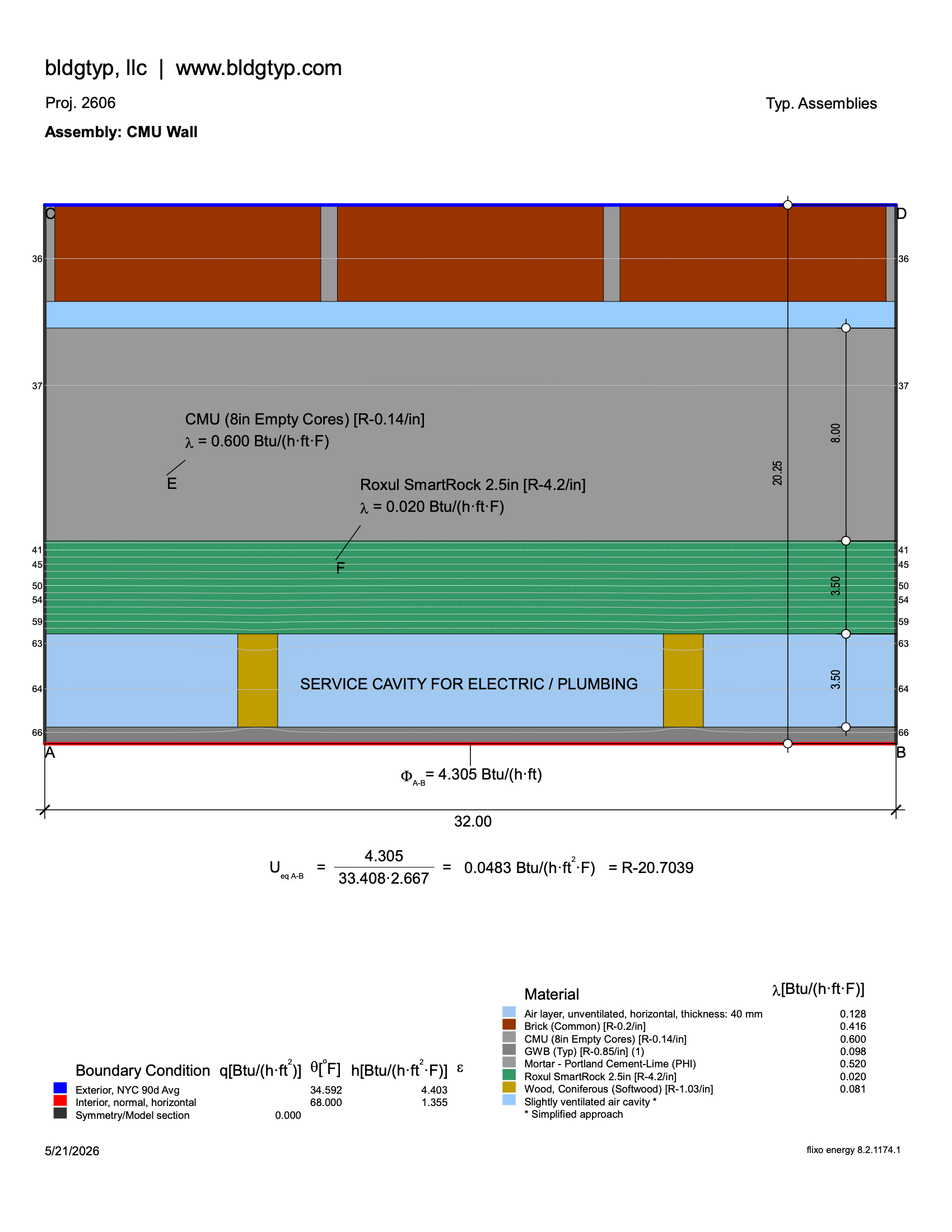
Ext. Wall - Front
Primary airtightness layer to be Pro-Clima Visconn or sim. liquid
applied airseal applied to inside of face of existing masonry.
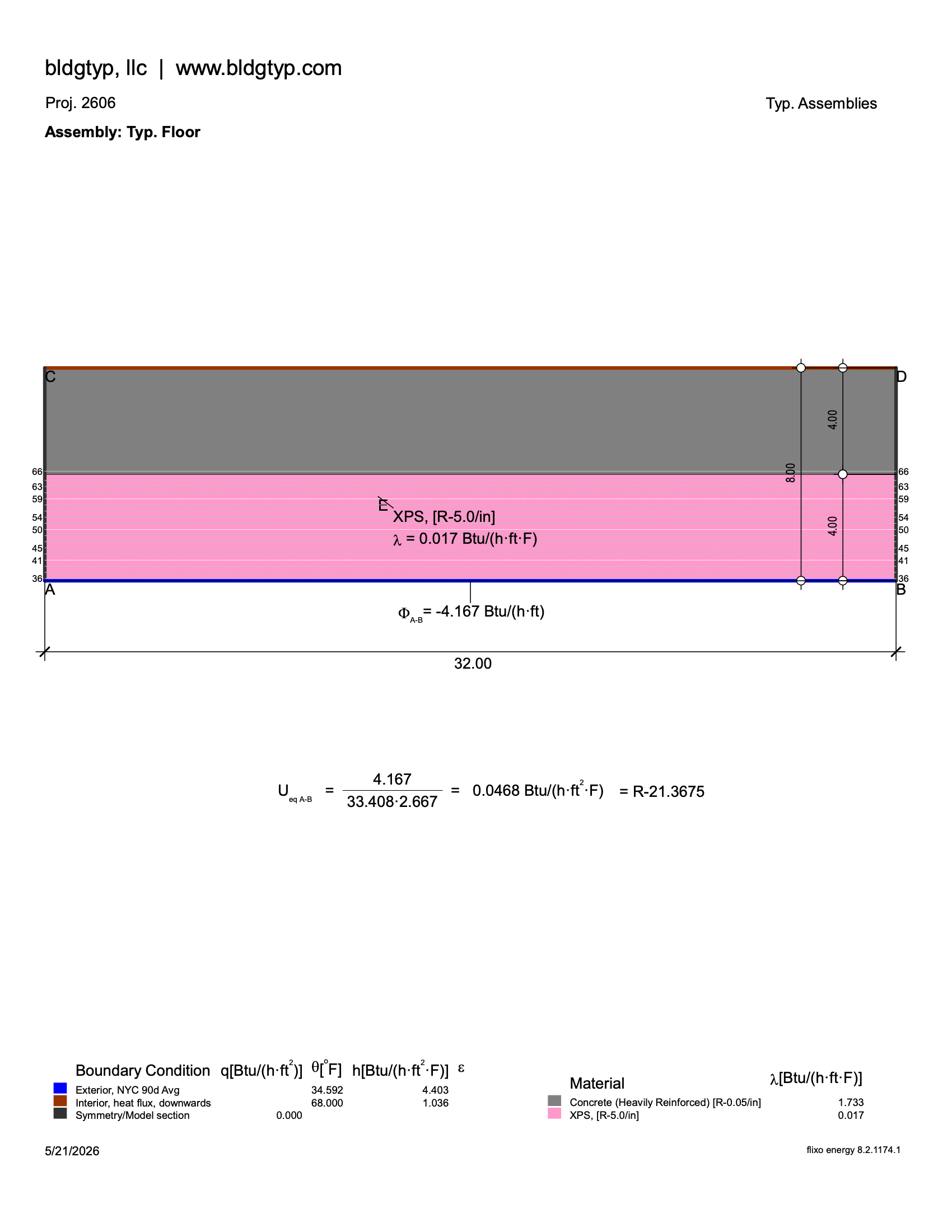
Install foam insulation in 2 layers of 2”, offset all board edges min 12”, fill all voids with low-expansion spray
foam.
Sub-slab air and vapor barrier to be installed directly below concrete (above insulation). Use 15 Mil
StegoHome or similar
Tape / Seal all penetrations and seams of sub-slab air and vapor barrier with
StegoTape / StegoMastic or
similar.
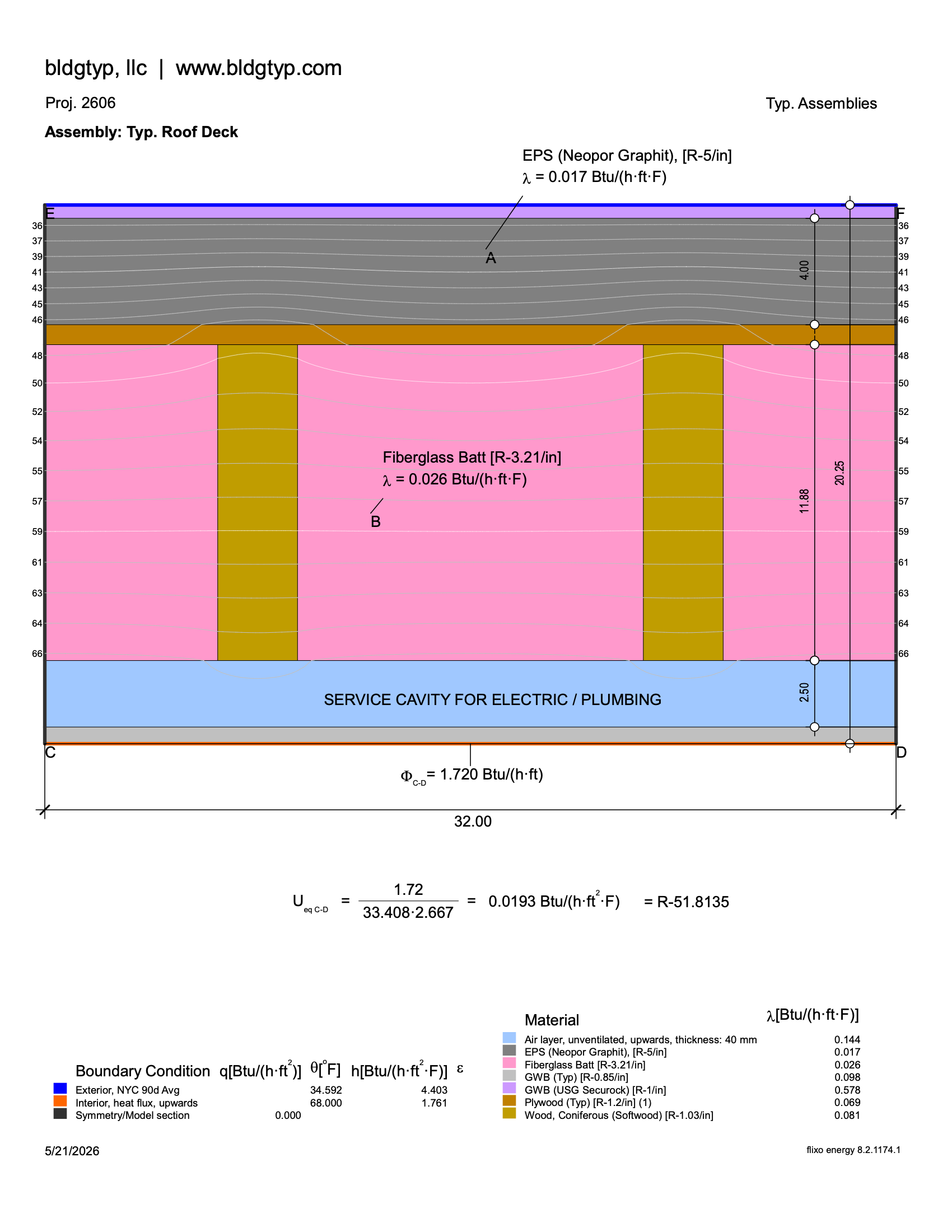
Roof - Deck
Install continuous insulation over wood-framed floor structure. Use min. 4” XPS foam insulation or sim.
Use adhered insulation where possible (avoid metal fasteners)
Primary air-barrier to be Intello Plus air and moisture vapor-retarder
installed along underside of all roof joists. If preferred, substitute A/C plywood. Tape all seams to ensure air and
moisture-vapor tight.
Use service cavity / drop-ceiling below air/vapor retarder membrane for all plumbing, electrical, and / or lighting
fixtures.
Primary air-barrier to be Intello Plus air and moisture vapor-retarder
installed along underside of all roof joists. If preferred, substitute A/C plywood. Tape all seams to ensure air and
moisture-vapor tight.
Use service cavity / drop-ceiling below air/vapor retarder membrane for all plumbing, electrical, and / or lighting
fixtures.
In order to achieve sufficient assembly R-Value, insulate service cavity with mineral fiber batt insulation.
02
Building Airtightness
The primary role of airtightness in buildings is to avoid interstitial condensation and mold/moisture damage to the
structure during the winter and shoulder-season months. Additionally, in hot climates, airtightness plays an important
role in restricting warm outdoor air and moisture vapor ingress from the exterior. This helps reduce energy consumption
needed for cooling and dehumidification while improving occupant comfort and building resiliency.
As well as its role in ensuring building durability, airtightness levels have a simple linear relationship to the
building’s heat loss: the more airtight the construction, the less heat is lost in winter and the better the energy
performance. In addition, airtightness has a large effect on indoor relative humidity during the summer months with a
corresponding reduction of cooling energy consumption and dehumidification need.
Code-minimum construction in most states requires an airtightness rate of somewhere between 3 to 7 air-changes per hour
(ACH), and the NYC Energy Code 2025 / Zone 4(A)
requires residential buildings in Climate Zones 3 to 8 to demonstrate an airtightness level of less than
3.0 ACH@50Pa.
In order to meet the recommended building performance level, this project should target an airtightness level of better
than 1.0 ACH@50Pa. Improving airtightness to this low
level is one of the best ways to improve performance, increase comfort and durability, and reduce the risk of
uncontrolled wintertime air leakage.
Winter Heat Loss due to Envelope Air Leakage
EnerPHit by Component shown across a range of blower-door results.
03
Masonry Rowhouse Air-Sealing Primer
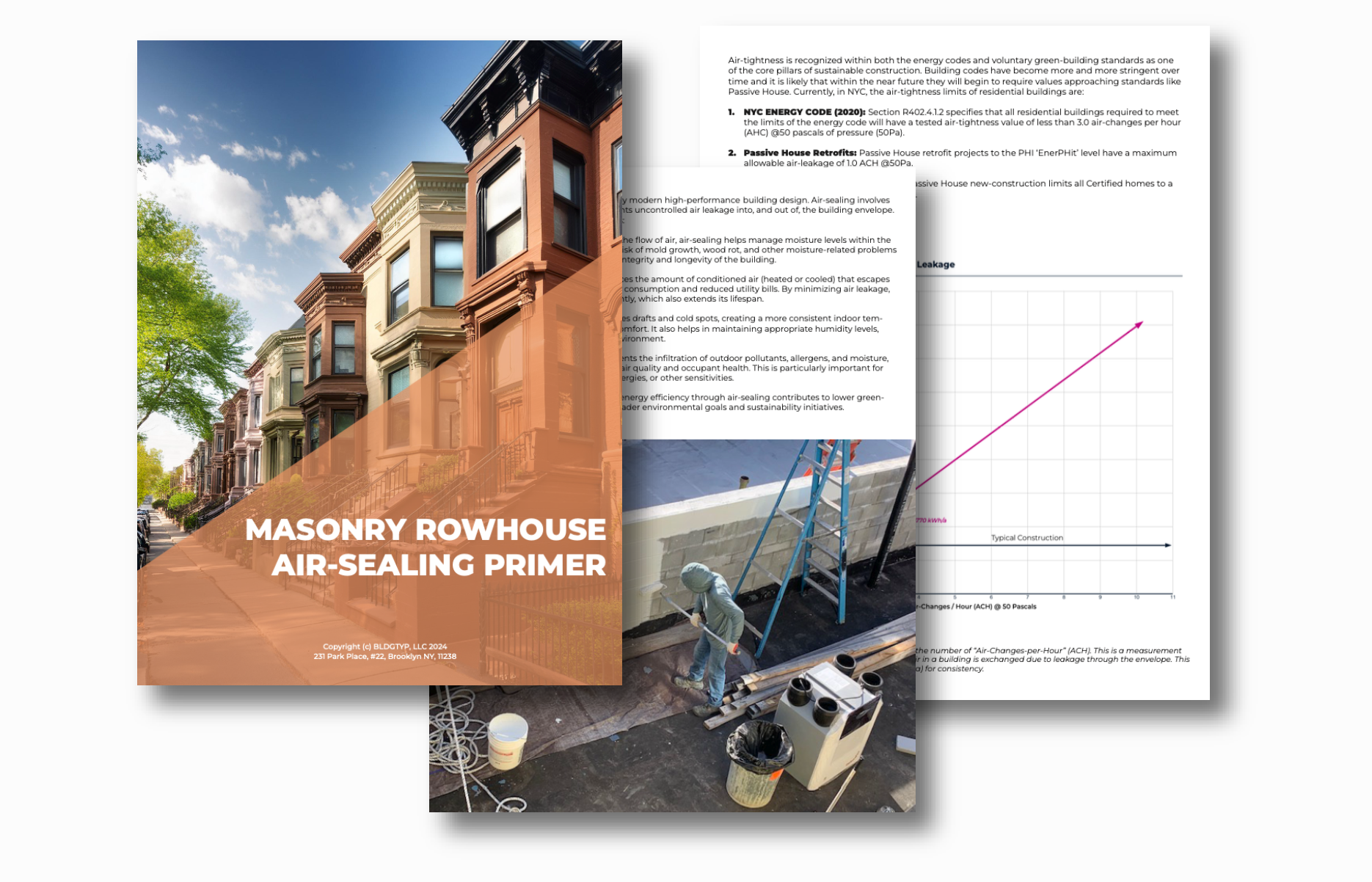
BLDGTYP has prepared a comprehensive Masonry Rowhouse Air-Sealing Primer for masonry townhouse
projects. The primer covers the value of air-sealing, common air-sealing methods for typical NYC
masonry residential assemblies, recommended products, and testing strategies.
Achieving Passive House levels of airtightness in existing buildings can be challenging. The dedicated air barrier
layers described above will provide excellent, durable airtightness. The goal should be to achieve Passive House
airtightness levels with the dedicated air barrier systems described above. However, some areas may be inaccessible due
to existing conditions or otherwise impractical to expose in order to accomplish perfect air sealing. In cases where air
sealing results are uncertain, we recommend having a backup plan in place.
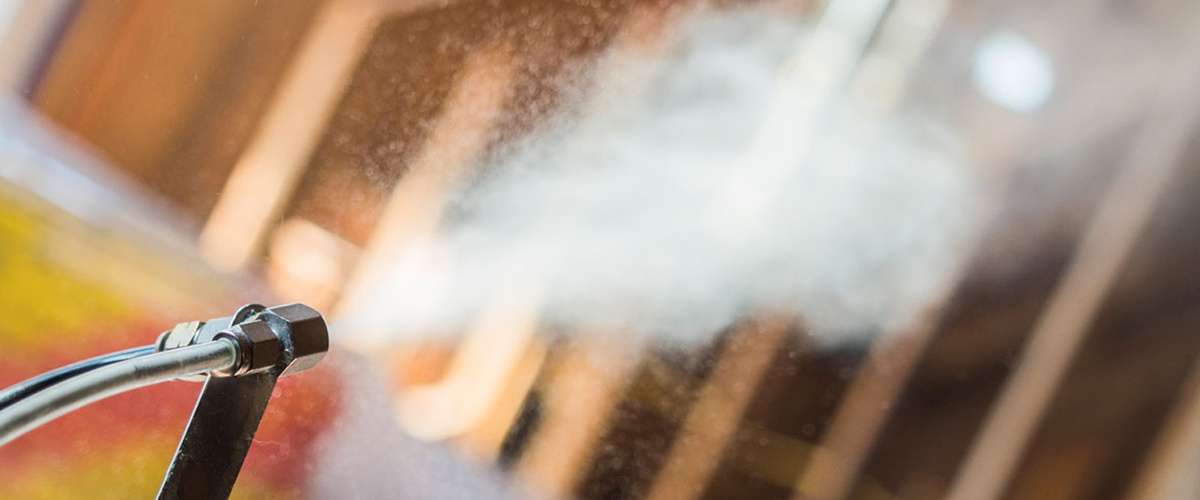
AeroBarrier provides whole-building air sealing using
an aerosolized polymer that “finds” leaks and seals them. We recommend consulting early in the build with an AeroBarrier
installer so that they can be included in the project schedule should their services be required.