01
Window Thermal Comfort
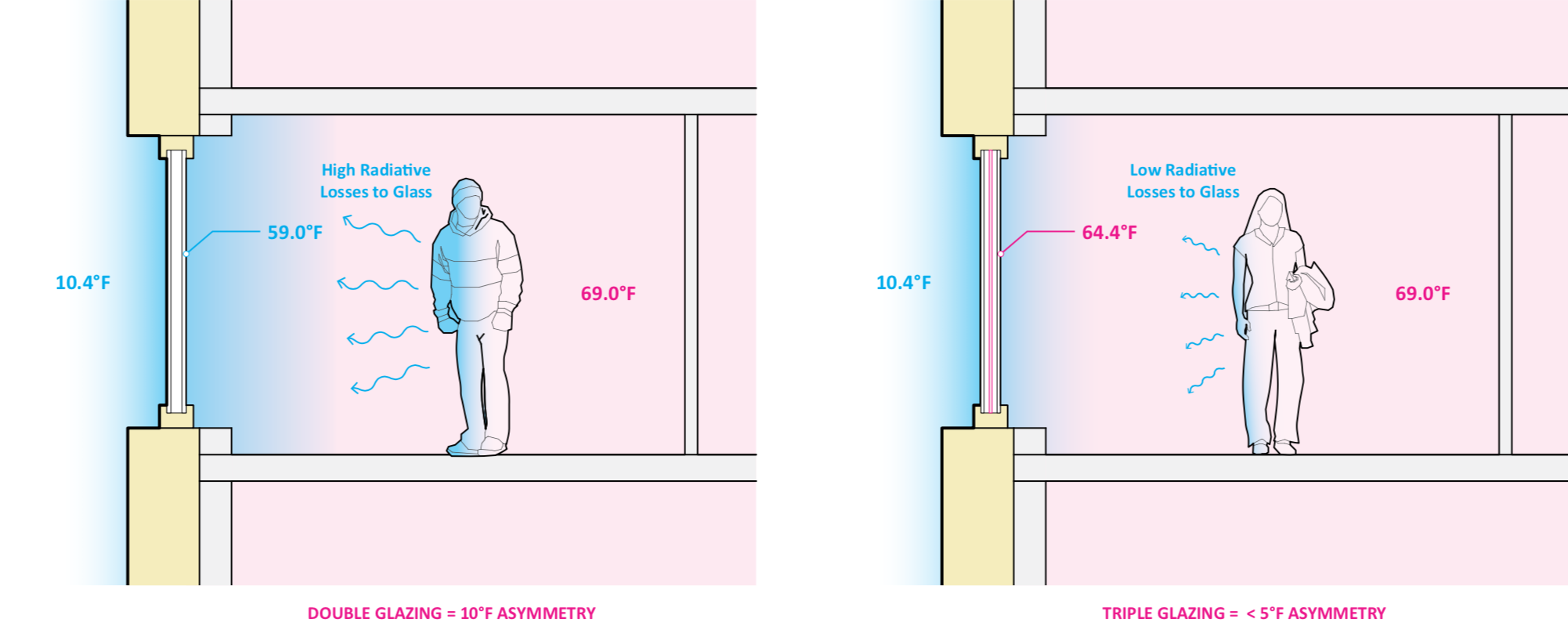
In any high-performance building, both the energy and occupant comfort impacts of the glazing must be carefully assessed. For a building seeking any of the PHI or Phius certifications, a very stringent evaluation and quantification of this thermal comfort impact must be executed. This comfort evaluation looks at both the overall occupant comfort as a result of air-temperature and relative-humidity but also the localized thermal discomfort caused by cold-surfaces and drafts at the glazing surface.
In particular, the localized discomfort which results from a radiant temperature asymmetry (a difference in the temperature of the surfaces surrounding the body) must be assessed in order to evaluate the possibility of eliminating perimeter heating. If the radiant temperature asymmetry exceeds a certain level, a compensating heat source may be required in order to offset the potential discomfort. Typically, this would mean a radiator of some form, installed beneath the window.
Many engineering reference standards suggests that ideal thermal comfort is found when there are temperature differences of less than 7.6°F [4.2°K] between all the surfaces around a person’s body. The windows are important in this respect, as this is where the coldest surface temperatures in the building will typically occur during the winter months.
For Zone 4(A)’s winter comfort-design weather conditions [ 10.4°F (-12.0°C) ], Passive House certification guidelines for this climate would recommend that as long as windows with an Installed R-Value higher than 5.6 hr-ft2-F/Btu [ U-Value less than 0.18 Btu/hr-ft2-F ] are used this will lead to surface temperatures which PHI finds acceptable for thermal comfort. Note, for smaller windows with a lower ‘view-factor’ (less visible to the occupants) slightly lower R-Values may still achieve the desired thermal comfort targets.
02
Site Shading
The energy balance of the windows is critical on any high-performance building project. The goal for this climate should be to take some advantage of wintertime solar gains in order to reduce overall heating energy need, while being extremely cautious about the potential for overheating and increasing cooling energy need. This can be particularly challenging with highly glazed rooms or space which feature large amounts of south or west facing glass.
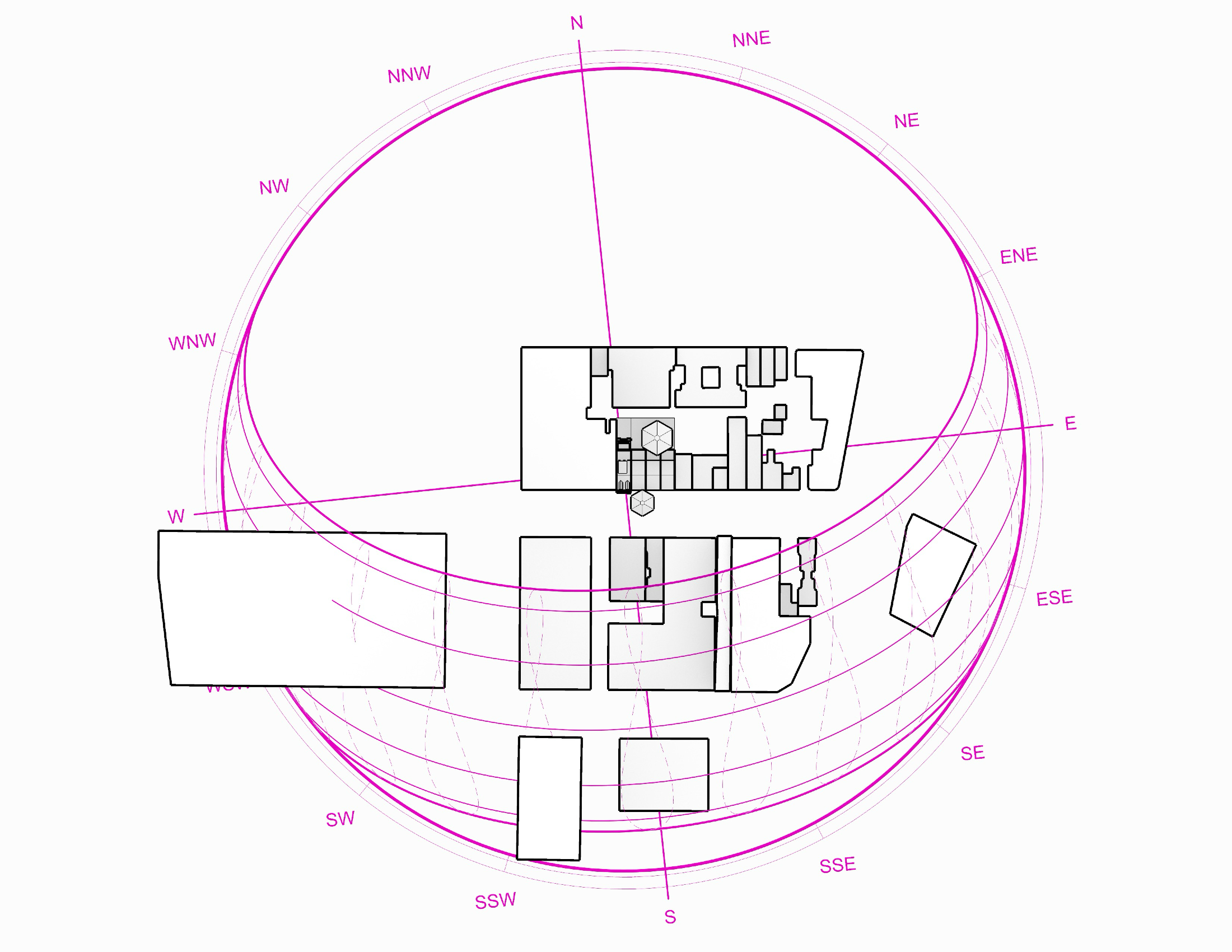
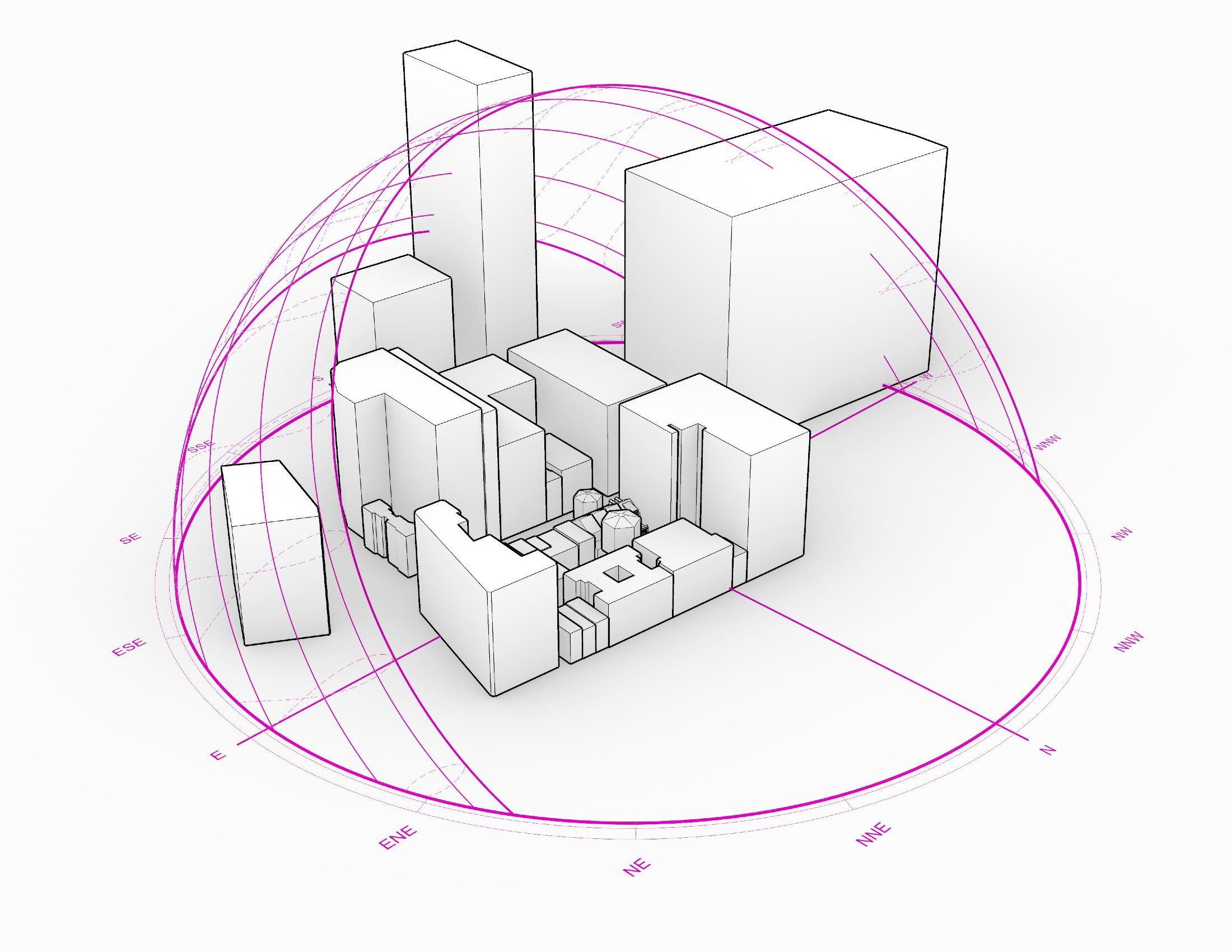
All radiation values presented consider the local shading context. Where relevant, this context is created using satellite images from google maps and plot lines from OpenStreet Map and CadMapper. The site shading and orientation includes the following:
Orientation / Sun-Path Diagrams:
03
Winter Radiation
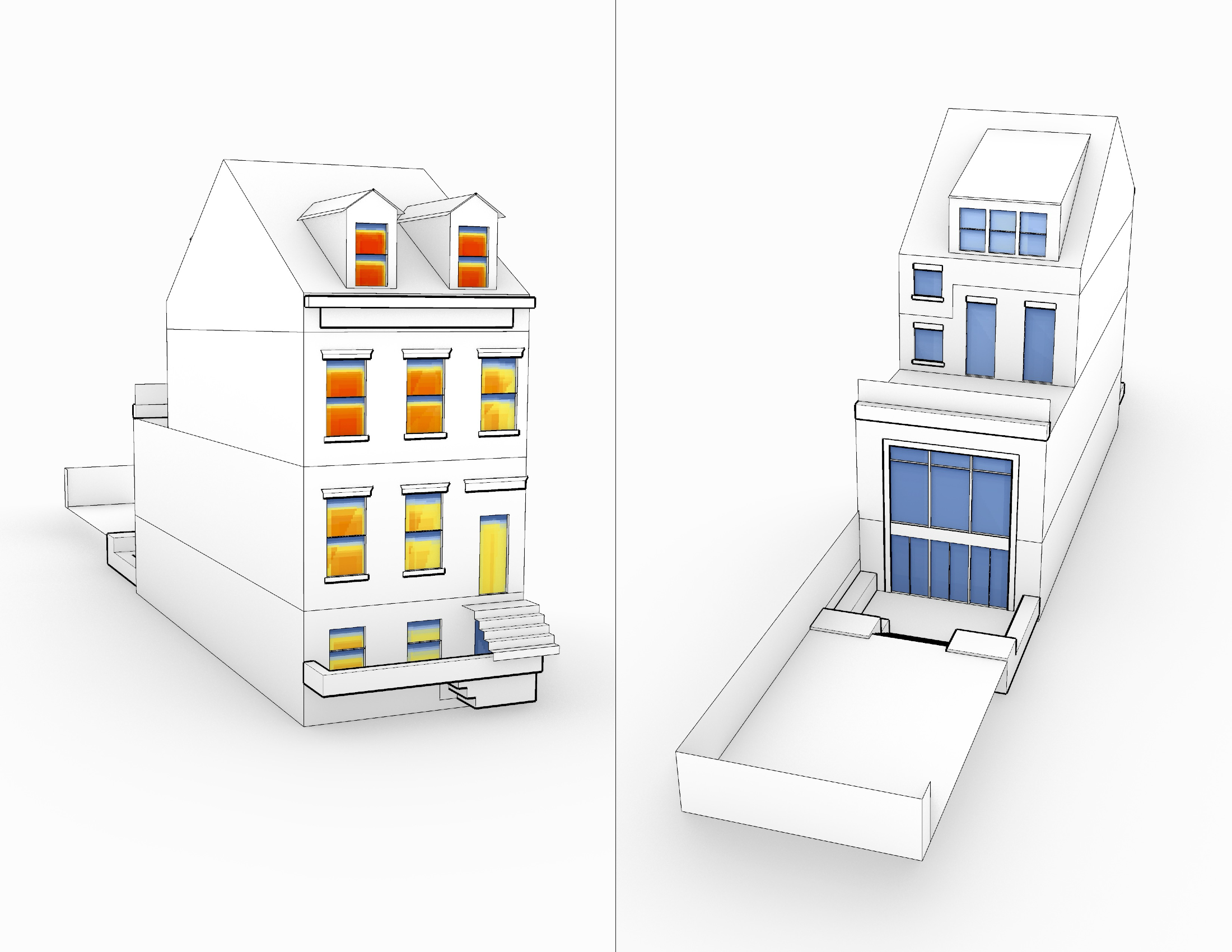
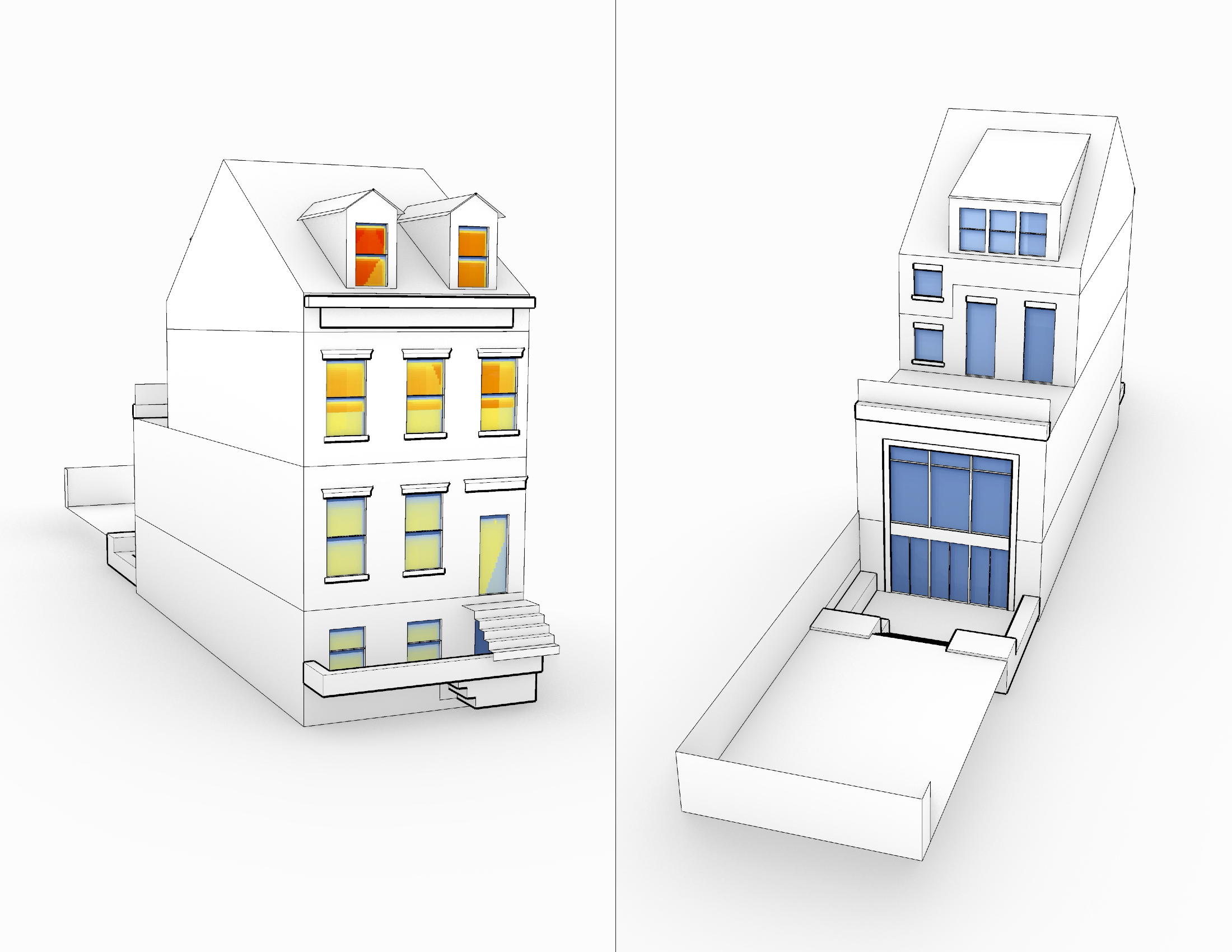
Taking into account the climate, orientation, and shading, in the results below we have assessed the average seasonal (winter / summer) solar radiation falling upon the windows in the project. The radiation levels will vary by orientation and as can be observed, shading obstructions also have a strong effect on the final level of solar radiation any individual window receives.
- Very good solar radiation is observed along the south facade which will help to reduce the wintertime heating energy need significantly.
- Very limited solar gain observed on all north side glazing. Given the large amount of glazing and the limited solar radiation, any small reduction in north-side glazing area (5% - 10%) would benefit the overall energy balance of the home.
- While the high levels of solar gain on the south do help reduce heating energy demand, it is possible that at some times this solar gain may be unwanted. It is recommended to ensure that all south-facing glazing, in particular the upper level windows in the dormers, are outfitted with robust user-operable blinds / shades to ensure against any thermal discomfort. While external shades are preferred, internal shades are a good option as well and can still help with glare and overheating issues.
04
Summer Radiation
- Even taking into account the street trees, fairly high solar radiation is observed along the south facade’s upper floors which will reduce thermal comfort.
- The most radiation is apparent on the upper floors, which receive the least amount of shading from the neighboring buildings or street trees.
- Coupled to the inevitable internal temperature stratification, this upper level solar radiation is the are most likely to see low thermal comfort in summer and early fall. It is recommended to prioritize shading for the dormer windows at minimum, and the top two floors if possible. Use robust user-operable interior blinds with high opacity and solar reflectance. Specify glazing with low SHGC (g-Value) for all south facing glazing.